 View product
FREE SHIPPING ON ORDERS OVER $99+ Dismiss
Skip to content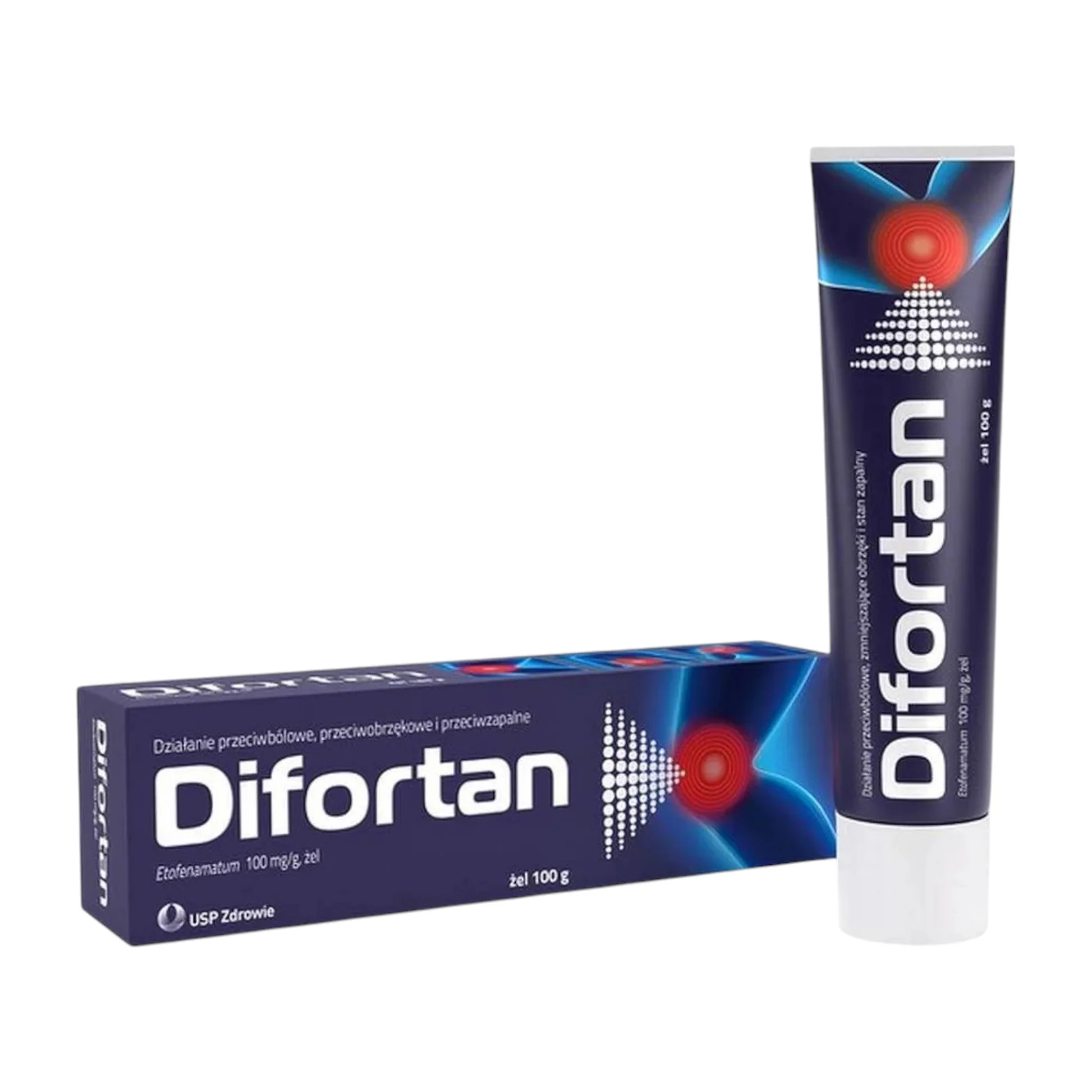
Out of stock
Difortan Żel 100 g to lek przeciwbólowy i przeciwzapalny do stosowania miejscowego, zawierający etofenamat 100 mg/g. Etofenamat należy do grupy niesteroidowych leków przeciwzapalnych (NLPZ) i jest stosowany bezpośrednio na skórę w bolesnym miejscu.
Difortan pomaga zmniejszać ból, obrzęk i stan zapalny związany z urazami mięśni i stawów oraz dolegliwościami reumatycznymi. Lek przeznaczony jest do stosowania u osób dorosłych.
Difortan Żel 100 mg/g jest przeznaczony do miejscowego leczenia bólu i stanów zapalnych mięśni oraz stawów.
Lek może być stosowany u dorosłych w przypadku:
Substancją czynną preparatu Difortan Żel jest etofenamat (Etofenamatum).
1 g żelu Difortan zawiera 100 mg etofenamatu.
Odpowiada to stężeniu 10% etofenamatu.
Etofenamat jest miejscowo stosowanym niesteroidowym lekiem przeciwzapalnym (NLPZ). Po nałożeniu na skórę nad bolesnym obszarem wykazuje działanie:
Difortan Żel 100 g może być stosowany miejscowo w przypadku łagodnego i umiarkowanego bólu mięśni, w tym dolegliwości związanych z urazami tkanek miękkich.
Żel nakłada się bezpośrednio na skórę w miejscu występowania bólu.
Difortan jest również wskazany w przypadku łagodnego i umiarkowanego bólu stawów, w tym dolegliwości związanych z chorobami reumatycznymi, takimi jak zapalenie stawów i choroba zwyrodnieniowa stawów.
Działanie przeciwzapalne etofenamatu pomaga zmniejszać ból, obrzęk i stan zapalny.
Difortan Żel może być stosowany w przypadku typowych urazów układu mięśniowo-szkieletowego, takich jak stłuczenia, skręcenia i naciągnięcia.
Urazy te mogą powodować miejscowy ból, obrzęk i stan zapalny. Etofenamat działa miejscowo jako niesteroidowy lek przeciwzapalny.
Difortan może być również stosowany miejscowo w przypadku zapalenia ścięgien, zapalenia więzadeł, zapalenia kaletki oraz niezakaźnego zapalenia stawów.
W przypadku poważnego urazu, znacznego ograniczenia ruchomości lub nasilającego się bólu i obrzęku należy skonsultować się z lekarzem.
Difortan 100 mg/g Żel może być stosowany w łagodnych i umiarkowanych bólach reumatycznych, w tym dolegliwościach związanych z chorobą zwyrodnieniową stawów i zapaleniem stawów.
Lek stosowany jest miejscowo bezpośrednio na bolesny obszar.
1 g żelu zawiera:
Etofenamat (Etofenamatum) – 100 mg
Odpowiada to stężeniu 10% etofenamatu.
Badania dotyczące etofenamatu:
Badania dotyczące etofenamatu w miejscowym leczeniu bólu mięśniowo-szkieletowego:
PubMed – Etofenamat i Ból Mięśniowo-Szkieletowy
Badania dotyczące miejscowych NLPZ w ostrym bólu mięśniowo-szkieletowym:
Badania dotyczące miejscowych NLPZ w chorobie zwyrodnieniowej stawów:
PubMed – Miejscowe NLPZ i Choroba Zwyrodnieniowa Stawów
Powyższe publikacje stanowią ogólne tło naukowe dotyczące etofenamatu i miejscowo stosowanych NLPZ. Nie zastępują aktualnej ulotki leku Difortan Żel 100 mg/g.
Difortan przeznaczony jest wyłącznie do stosowania zewnętrznego na skórę.
Zwykle stosuje się pasek żelu o długości około 2,5–5 cm, 3–4 razy na dobę.
Żel należy delikatnie wmasować w skórę w miejscu występowania bólu lub stanu zapalnego.
W przypadku dolegliwości reumatycznych wymagających dłuższego leczenia częstotliwość stosowania może zostać zmniejszona do 2–3 razy na dobę.
Nie należy stosować leku dłużej niż zaleca aktualna ulotka, chyba że lekarz zaleci inaczej.
Produkt: Difortan
Postać: Żel
Moc: 100 mg/g (10%)
Opakowanie: 100 g
Substancja czynna: Etofenamat (Etofenamatum)
Grupa: Niesteroidowy lek przeciwzapalny (NLPZ)
Zastosowanie: Ból i stany zapalne mięśni oraz stawów
Dla: Dorosłych
Difortan jest przeznaczony wyłącznie do stosowania zewnętrznego na skórę.
Nie stosować na oczy, błony śluzowe, otwarte rany ani uszkodzoną skórę.
Nie stosować w przypadku uczulenia na etofenamat lub którykolwiek z pozostałych składników leku.
Nie stosować leku Difortan w okresie ciąży.
Podczas leczenia oraz przez 2 tygodnie po jego zakończeniu należy chronić leczone miejsca przed światłem słonecznym i promieniowaniem UV, ponieważ mogą wystąpić reakcje skórne.
Jeśli po 7 dniach stosowania nie nastąpi poprawa lub objawy się nasilą, należy skontaktować się z lekarzem.
Przed zastosowaniem należy przeczytać aktualną ulotkę dla pacjenta zawierającą pełne informacje dotyczące dawkowania, przeciwwskazań, środków ostrożności i możliwych działań niepożądanych.
Przechowywać w miejscu niewidocznym i niedostępnym dla dzieci.
Kliknij tutaj, aby poznać nasze inne preparaty na ból mięśni i stawów, stłuczenia, skręcenia, naciągnięcia, bóle reumatyczne oraz żele przeciwbólowe!
Difortan Gel 100 g is a topical anti-inflammatory and pain-relieving medicine containing etofenamate 100 mg/g. Etofenamate belongs to the group of medicines known as non-steroidal anti-inflammatory drugs (NSAIDs) and is applied directly to painful areas of the skin.
Difortan helps reduce pain, swelling, and inflammation associated with muscle and joint injuries and rheumatic conditions. It is intended for use by adults and can be applied directly to the affected area.
Difortan Gel 100 mg/g is intended for the topical treatment of pain and inflammation affecting muscles and joints.
It can be used in adults for:
The active ingredient in Difortan Gel is etofenamate (Etofenamatum).
Each 1 g of Difortan Gel contains 100 mg of etofenamate.
Etofenamate is a topical NSAID (non-steroidal anti-inflammatory drug). When applied to the skin over the affected area, it provides local anti-inflammatory and analgesic activity.
Its principal effects include:
Difortan Gel 100 g can be applied locally for mild to moderate muscle pain, including pain associated with soft-tissue injuries.
Applying the gel directly to the affected area allows the active ingredient to act locally at the site of discomfort.
Difortan is also indicated for mild to moderate joint pain, including pain associated with rheumatic conditions such as osteoarthritis and arthritis.
The anti-inflammatory properties of etofenamate help reduce inflammation, swelling, and pain in the affected area.
Difortan Gel can be used for common musculoskeletal injuries including bruises, sprains, and strains.
These types of injuries can cause localized pain, swelling, and inflammation. Etofenamate provides topical NSAID activity directly in the affected area.
Difortan can also be used for localized inflammatory musculoskeletal conditions, including tendinitis, ligament inflammation, bursitis, and non-infectious arthritis.
If an injury is severe, movement is significantly restricted, or pain and swelling continue to worsen, medical evaluation may be necessary.
Difortan 100 mg/g Gel can be used for mild to moderate rheumatic pain, including symptoms associated with osteoarthritis and arthritis.
The medicine is intended for topical application and acts locally to help relieve pain and inflammation.
1 g of Difortan Gel contains:
Etofenamate (Etofenamatum) – 100 mg
This corresponds to a concentration of 10% etofenamate.
Scientific research concerning etofenamate and topical treatment:
Research concerning topical etofenamate for musculoskeletal pain:
PubMed – Etofenamate & Musculoskeletal Pain
Research concerning topical NSAIDs and acute musculoskeletal pain:
PubMed – Topical NSAIDs & Musculoskeletal Pain
Research concerning topical NSAIDs and osteoarthritis:
PubMed – Topical NSAIDs & Osteoarthritis
These publications provide scientific background concerning etofenamate and topical NSAIDs. They should not replace the official Difortan patient information leaflet.
Difortan Gel is for external use on the skin only.
Unless otherwise directed by a healthcare professional, apply a strip of gel approximately 2.5–5 cm long to the affected area 3–4 times daily.
Gently massage the gel into the skin over the painful or inflamed area.
For rheumatic conditions requiring longer treatment, the frequency may be reduced to 2–3 applications daily.
Do not use for longer than recommended in the current patient leaflet unless advised by a doctor.
Product: Difortan
Form: Gel
Strength: 100 mg/g (10%)
Package: 100 g
Active Ingredient: Etofenamate (Etofenamatum)
Drug Class: Topical NSAID
Use: Muscle and joint pain and inflammation
For: Adults
Difortan is intended for external use on the skin only.
Do not apply the medicine to the eyes, mucous membranes, open wounds, or damaged skin.
Do not use if you are allergic to etofenamate or any other ingredient in the medicine.
Do not use Difortan during pregnancy.
The treated area should be protected from sunlight and solarium/UV exposure during treatment and for two weeks after treatment because skin reactions can occur.
If symptoms worsen or do not improve after 7 days, consult a doctor.
Do not use Difortan for longer than the period recommended in the current patient leaflet unless your doctor advises otherwise.
Always read the current patient information leaflet before use for complete information about contraindications, precautions, interactions, side effects, and appropriate duration of treatment.
Keep out of the sight and reach of children.
Click here to explore our other products for muscle pain, joint pain, sprains, strains, bruises, rheumatic pain, and topical pain relief!
View product
→
 View product
→
View product
→
 View product
→
View product
→
 View product
→
View product
→
 View product
→
View product
→
 View product
→
View product
→
 View product
→
View product
→
 View product
→
View product
→
 View product
→
View product
→
 View product
→
View product
→
$25.99
Out of stock
Difortan Żel 100 g to lek przeciwbólowy i przeciwzapalny do stosowania miejscowego, zawierający etofenamat 100 mg/g. Etofenamat należy do grupy niesteroidowych leków przeciwzapalnych (NLPZ) i jest stosowany bezpośrednio na skórę w bolesnym miejscu.
Difortan pomaga zmniejszać ból, obrzęk i stan zapalny związany z urazami mięśni i stawów oraz dolegliwościami reumatycznymi. Lek przeznaczony jest do stosowania u osób dorosłych.
Difortan Żel 100 mg/g jest przeznaczony do miejscowego leczenia bólu i stanów zapalnych mięśni oraz stawów.
Lek może być stosowany u dorosłych w przypadku:
Substancją czynną preparatu Difortan Żel jest etofenamat (Etofenamatum).
1 g żelu Difortan zawiera 100 mg etofenamatu.
Odpowiada to stężeniu 10% etofenamatu.
Etofenamat jest miejscowo stosowanym niesteroidowym lekiem przeciwzapalnym (NLPZ). Po nałożeniu na skórę nad bolesnym obszarem wykazuje działanie:
Difortan Żel 100 g może być stosowany miejscowo w przypadku łagodnego i umiarkowanego bólu mięśni, w tym dolegliwości związanych z urazami tkanek miękkich.
Żel nakłada się bezpośrednio na skórę w miejscu występowania bólu.
Difortan jest również wskazany w przypadku łagodnego i umiarkowanego bólu stawów, w tym dolegliwości związanych z chorobami reumatycznymi, takimi jak zapalenie stawów i choroba zwyrodnieniowa stawów.
Działanie przeciwzapalne etofenamatu pomaga zmniejszać ból, obrzęk i stan zapalny.
Difortan Żel może być stosowany w przypadku typowych urazów układu mięśniowo-szkieletowego, takich jak stłuczenia, skręcenia i naciągnięcia.
Urazy te mogą powodować miejscowy ból, obrzęk i stan zapalny. Etofenamat działa miejscowo jako niesteroidowy lek przeciwzapalny.
Difortan może być również stosowany miejscowo w przypadku zapalenia ścięgien, zapalenia więzadeł, zapalenia kaletki oraz niezakaźnego zapalenia stawów.
W przypadku poważnego urazu, znacznego ograniczenia ruchomości lub nasilającego się bólu i obrzęku należy skonsultować się z lekarzem.
Difortan 100 mg/g Żel może być stosowany w łagodnych i umiarkowanych bólach reumatycznych, w tym dolegliwościach związanych z chorobą zwyrodnieniową stawów i zapaleniem stawów.
Lek stosowany jest miejscowo bezpośrednio na bolesny obszar.
1 g żelu zawiera:
Etofenamat (Etofenamatum) – 100 mg
Odpowiada to stężeniu 10% etofenamatu.
Badania dotyczące etofenamatu:
Badania dotyczące etofenamatu w miejscowym leczeniu bólu mięśniowo-szkieletowego:
PubMed – Etofenamat i Ból Mięśniowo-Szkieletowy
Badania dotyczące miejscowych NLPZ w ostrym bólu mięśniowo-szkieletowym:
Badania dotyczące miejscowych NLPZ w chorobie zwyrodnieniowej stawów:
PubMed – Miejscowe NLPZ i Choroba Zwyrodnieniowa Stawów
Powyższe publikacje stanowią ogólne tło naukowe dotyczące etofenamatu i miejscowo stosowanych NLPZ. Nie zastępują aktualnej ulotki leku Difortan Żel 100 mg/g.
Difortan przeznaczony jest wyłącznie do stosowania zewnętrznego na skórę.
Zwykle stosuje się pasek żelu o długości około 2,5–5 cm, 3–4 razy na dobę.
Żel należy delikatnie wmasować w skórę w miejscu występowania bólu lub stanu zapalnego.
W przypadku dolegliwości reumatycznych wymagających dłuższego leczenia częstotliwość stosowania może zostać zmniejszona do 2–3 razy na dobę.
Nie należy stosować leku dłużej niż zaleca aktualna ulotka, chyba że lekarz zaleci inaczej.
Produkt: Difortan
Postać: Żel
Moc: 100 mg/g (10%)
Opakowanie: 100 g
Substancja czynna: Etofenamat (Etofenamatum)
Grupa: Niesteroidowy lek przeciwzapalny (NLPZ)
Zastosowanie: Ból i stany zapalne mięśni oraz stawów
Dla: Dorosłych
Difortan jest przeznaczony wyłącznie do stosowania zewnętrznego na skórę.
Nie stosować na oczy, błony śluzowe, otwarte rany ani uszkodzoną skórę.
Nie stosować w przypadku uczulenia na etofenamat lub którykolwiek z pozostałych składników leku.
Nie stosować leku Difortan w okresie ciąży.
Podczas leczenia oraz przez 2 tygodnie po jego zakończeniu należy chronić leczone miejsca przed światłem słonecznym i promieniowaniem UV, ponieważ mogą wystąpić reakcje skórne.
Jeśli po 7 dniach stosowania nie nastąpi poprawa lub objawy się nasilą, należy skontaktować się z lekarzem.
Przed zastosowaniem należy przeczytać aktualną ulotkę dla pacjenta zawierającą pełne informacje dotyczące dawkowania, przeciwwskazań, środków ostrożności i możliwych działań niepożądanych.
Przechowywać w miejscu niewidocznym i niedostępnym dla dzieci.
Kliknij tutaj, aby poznać nasze inne preparaty na ból mięśni i stawów, stłuczenia, skręcenia, naciągnięcia, bóle reumatyczne oraz żele przeciwbólowe!
Difortan Gel 100 g is a topical anti-inflammatory and pain-relieving medicine containing etofenamate 100 mg/g. Etofenamate belongs to the group of medicines known as non-steroidal anti-inflammatory drugs (NSAIDs) and is applied directly to painful areas of the skin.
Difortan helps reduce pain, swelling, and inflammation associated with muscle and joint injuries and rheumatic conditions. It is intended for use by adults and can be applied directly to the affected area.
Difortan Gel 100 mg/g is intended for the topical treatment of pain and inflammation affecting muscles and joints.
It can be used in adults for:
The active ingredient in Difortan Gel is etofenamate (Etofenamatum).
Each 1 g of Difortan Gel contains 100 mg of etofenamate.
Etofenamate is a topical NSAID (non-steroidal anti-inflammatory drug). When applied to the skin over the affected area, it provides local anti-inflammatory and analgesic activity.
Its principal effects include:
Difortan Gel 100 g can be applied locally for mild to moderate muscle pain, including pain associated with soft-tissue injuries.
Applying the gel directly to the affected area allows the active ingredient to act locally at the site of discomfort.
Difortan is also indicated for mild to moderate joint pain, including pain associated with rheumatic conditions such as osteoarthritis and arthritis.
The anti-inflammatory properties of etofenamate help reduce inflammation, swelling, and pain in the affected area.
Difortan Gel can be used for common musculoskeletal injuries including bruises, sprains, and strains.
These types of injuries can cause localized pain, swelling, and inflammation. Etofenamate provides topical NSAID activity directly in the affected area.
Difortan can also be used for localized inflammatory musculoskeletal conditions, including tendinitis, ligament inflammation, bursitis, and non-infectious arthritis.
If an injury is severe, movement is significantly restricted, or pain and swelling continue to worsen, medical evaluation may be necessary.
Difortan 100 mg/g Gel can be used for mild to moderate rheumatic pain, including symptoms associated with osteoarthritis and arthritis.
The medicine is intended for topical application and acts locally to help relieve pain and inflammation.
1 g of Difortan Gel contains:
Etofenamate (Etofenamatum) – 100 mg
This corresponds to a concentration of 10% etofenamate.
Scientific research concerning etofenamate and topical treatment:
Research concerning topical etofenamate for musculoskeletal pain:
PubMed – Etofenamate & Musculoskeletal Pain
Research concerning topical NSAIDs and acute musculoskeletal pain:
PubMed – Topical NSAIDs & Musculoskeletal Pain
Research concerning topical NSAIDs and osteoarthritis:
PubMed – Topical NSAIDs & Osteoarthritis
These publications provide scientific background concerning etofenamate and topical NSAIDs. They should not replace the official Difortan patient information leaflet.
Difortan Gel is for external use on the skin only.
Unless otherwise directed by a healthcare professional, apply a strip of gel approximately 2.5–5 cm long to the affected area 3–4 times daily.
Gently massage the gel into the skin over the painful or inflamed area.
For rheumatic conditions requiring longer treatment, the frequency may be reduced to 2–3 applications daily.
Do not use for longer than recommended in the current patient leaflet unless advised by a doctor.
Product: Difortan
Form: Gel
Strength: 100 mg/g (10%)
Package: 100 g
Active Ingredient: Etofenamate (Etofenamatum)
Drug Class: Topical NSAID
Use: Muscle and joint pain and inflammation
For: Adults
Difortan is intended for external use on the skin only.
Do not apply the medicine to the eyes, mucous membranes, open wounds, or damaged skin.
Do not use if you are allergic to etofenamate or any other ingredient in the medicine.
Do not use Difortan during pregnancy.
The treated area should be protected from sunlight and solarium/UV exposure during treatment and for two weeks after treatment because skin reactions can occur.
If symptoms worsen or do not improve after 7 days, consult a doctor.
Do not use Difortan for longer than the period recommended in the current patient leaflet unless your doctor advises otherwise.
Always read the current patient information leaflet before use for complete information about contraindications, precautions, interactions, side effects, and appropriate duration of treatment.
Keep out of the sight and reach of children.
Click here to explore our other products for muscle pain, joint pain, sprains, strains, bruises, rheumatic pain, and topical pain relief!