
 View product
FREE SHIPPING ON ORDERS OVER $99+ Dismiss
Skip to content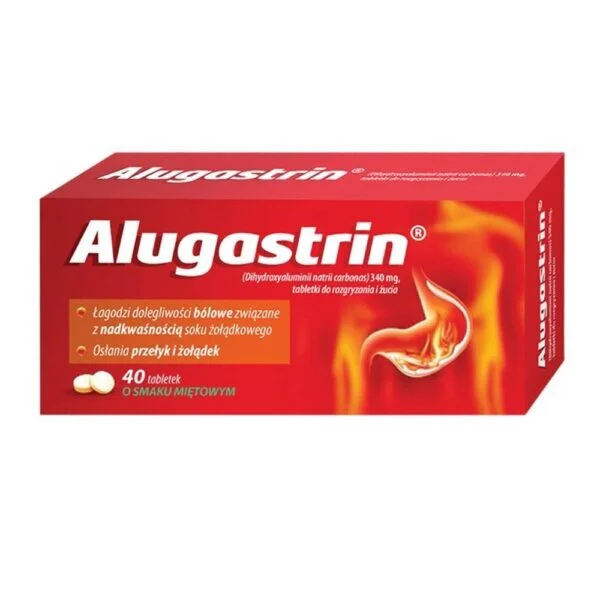
In stock
Alugastrin to dostępny bez recepty produkt leczniczy zawierający 340 mg dihydroksyglinowo-sodowego węglanu w jednej tabletce do rozgryzania i żucia. Miętowe tabletki są przeznaczone do objawowego stosowania w przypadku dolegliwości związanych z nadmiarem kwasu żołądkowego, w tym zgagi, kwaśnego odbijania, zarzucania kwaśnej treści żołądkowej oraz epizodycznego refluksu.
Substancja czynna preparatu Alugastrin działa poprzez zobojętnianie nadmiaru kwasu solnego w żołądku. Wiąże również pepsynę i kwasy żółciowe, pomagając zmniejszyć drażniące działanie treści żołądkowej na błonę śluzową przełyku, żołądka i dwunastnicy. Oficjalna charakterystyka produktu opisuje szybkie ustępowanie dolegliwości dyspeptycznych związanych z nadkwaśnością. (Alugastrin – oficjalne informacje)
Alugastrin ma postać białych, okrągłych tabletek o miętowym smaku i zapachu. Tabletki są przeznaczone do rozgryzania lub żucia, a nie do połykania w całości.
Kliknij tutaj, aby poznać nasze inne produkty na zgagę, refluks, trawienie, żołądek, nadkwaśność, leki zobojętniające kwas oraz inne produkty apteczne!
Substancja czynna wykazuje stosunkowo szybkie działanie neutralizujące oraz bardziej przedłużone działanie związane z powstawaniem wodorotlenku glinu w żołądku. Wiąże również pepsynę i kwasy żółciowe, zmniejszając ich drażniący wpływ na błonę śluzową przewodu pokarmowego. (Charakterystyka Produktu Leczniczego Alugastrin)
Tabletki zawierają również:
Miętowa substancja smakowo-zapachowa odpowiada za charakterystyczny smak i aromat tabletek. (Ulotka Alugastrin)
Alugastrin należy do grupy leków zobojętniających kwas żołądkowy. W przeciwieństwie do leków hamujących produkcję kwasu, jego substancja czynna działa bezpośrednio na kwas obecny już w żołądku.
Dihydroksyglinowo-sodowy węglan neutralizuje kwas solny, zwiększając pH treści żołądkowej. Dzięki temu zmniejsza się kwaśność, która może powodować pieczenie za mostkiem, zgagę i kwaśne odbijanie.
Substancja czynna wiąże również pepsynę i kwasy żółciowe, co może dodatkowo ograniczać drażniące działanie treści żołądkowej. Oficjalna charakterystyka produktu opisuje szybkie ustępowanie objawów dyspeptycznych związanych z nadkwaśnością. (Charakterystyka Produktu Leczniczego Alugastrin)
Dla dorosłych i dzieci powyżej 6. roku życia:
Rozgryźć lub żuć 1–2 tabletki około 1 godziny po posiłkach i przed snem albo w razie wystąpienia dolegliwości.
Maksymalna dawka dobowa wynosi 6 tabletek. (Ulotka Alugastrin)
U dorosłych, jeżeli po 14 dniach nie nastąpi poprawa lub objawy się nasilą, należy skontaktować się z lekarzem. U dzieci należy zasięgnąć porady lekarza, jeżeli po 7 dniach nie nastąpi poprawa. (Ulotka Alugastrin)
Należy przyjąć 1 lub 2 tabletki Alugastrin i dokładnie je rozgryźć lub żuć.
Lek należy stosować około 1 godziny po posiłku, przed snem lub w razie wystąpienia dolegliwości.
Tabletek nie należy połykać w całości.
Nie należy przekraczać 6 tabletek w ciągu doby.
Ponieważ leki zobojętniające mogą wpływać na wchłanianie innych leków doustnych, Alugastrinu nie należy przyjmować jednocześnie ze wszystkimi innymi lekami. W przypadku wielu preparatów konieczne jest zachowanie odpowiedniego odstępu czasowego. (Charakterystyka Produktu Leczniczego Alugastrin)
Leki zobojętniające kwas żołądkowy są dobrze poznaną grupą preparatów stosowanych do krótkotrwałego, objawowego łagodzenia zgagi i dolegliwości związanych z nadkwaśnością. Ich podstawowym mechanizmem działania jest neutralizacja kwasu solnego, co zwiększa pH treści żołądkowej i może zmniejszać dolegliwości związane z refluksem.
Przegląd systematyczny i metaanaliza leków dostępnych bez recepty stosowanych w chorobie refluksowej wykazały, że leki zobojętniające dawały lepszą poprawę objawów niż placebo w części analizowanych badań, choć efekt był mniejszy niż w przypadku niektórych leków hamujących wydzielanie kwasu. Wyniki te wspierają stosowanie leków zobojętniających przede wszystkim przy epizodycznych objawach, a nie jako zamiennika długotrwałego leczenia w przypadku przewlekłego refluksu. (PubMed)
Przegląd farmakologii klinicznej leków zobojętniających opisuje ich zastosowanie między innymi w chorobie wrzodowej, refluksie i niestrawności. Zwraca również uwagę, że leki zobojętniające mogą wpływać na wchłanianie innych preparatów doustnych, dlatego odpowiednie rozdzielenie czasowe przyjmowanych leków jest istotne. (PubMed)
Nowsze przeglądy nadal wskazują na przydatność leków zobojętniających jako preparatów stosowanych doraźnie w przypadku objawów refluksu, ponieważ mogą zapewniać stosunkowo szybkie złagodzenie dolegliwości. Jednocześnie nie wykazują takiego działania gojącego w przypadku nadżerkowego zapalenia przełyku jak leki silniej hamujące wydzielanie kwasu. (PubMed)
Dostępne dane wspierają więc rolę Alugastrin jako leku zobojętniającego stosowanego objawowo, natomiast częste, utrzymujące się lub nasilone objawy refluksu powinny zostać ocenione przez lekarza, aby ustalić właściwe leczenie.
Alugastrin is an over-the-counter antacid medicine containing 340 mg of dihydroxyaluminum sodium carbonate per chewable tablet. The mint-flavored tablets are designed for the symptomatic relief of conditions associated with excess stomach acid, including heartburn, acid regurgitation and occasional reflux symptoms.
The active ingredient in Alugastrin works by neutralizing excess hydrochloric acid in the stomach. It also binds pepsin and bile acids, helping reduce the irritating effects of gastric contents on the mucous membranes of the esophagus, stomach and duodenum. The official product information describes Alugastrin as providing rapid relief of dyspeptic symptoms associated with gastric hyperacidity. (Alugastrin official product information)
Alugastrin is supplied as white, round tablets with a characteristic mint taste and aroma. The tablets are designed to be chewed or bitten, rather than swallowed whole, allowing the medicine to act locally within the gastrointestinal tract.
Click here to explore our other heartburn, digestive health, reflux, stomach, antacid, and pharmacy products!
The active ingredient has both a relatively rapid acid-neutralizing effect and a more prolonged effect associated with the formation of aluminum hydroxide in the stomach. According to the official product information, it also binds pepsin and bile acids, helping reduce the irritating influence of gastric contents. (Alugastrin SmPC)
The tablets also contain:
The mint flavoring provides the characteristic mint taste and aroma of the chewable tablets. (Alugastrin official leaflet)
Alugastrin belongs to the antacid class of medicines. Rather than preventing the stomach from producing acid, its active ingredient acts directly on acid already present in the stomach.
Dihydroxyaluminum sodium carbonate neutralizes hydrochloric acid, helping increase the pH of gastric contents. This reduces the acidity that can contribute to burning sensations, sour regurgitation and other symptoms associated with hyperacidity.
The active ingredient also binds pepsin and bile acids, which may further reduce irritation of the mucous membrane of the upper gastrointestinal tract. The official product information describes rapid improvement of dyspeptic symptoms associated with gastric hyperacidity. (Alugastrin SmPC)
For adults and children over 6 years of age:
Chew or bite 1–2 tablets approximately 1 hour after meals and before bedtime, or when symptoms occur.
The maximum daily dose is 6 tablets. (Alugastrin patient leaflet)
For adults, if symptoms do not improve within 14 days, or become worse, a doctor should be consulted. For children, medical advice should be sought if there is no improvement within 7 days. (Alugastrin patient leaflet)
Take 1 or 2 Alugastrin tablets and chew or bite them thoroughly.
Use approximately 1 hour after meals, before bedtime, or when heartburn or other indicated symptoms occur.
The tablets should not be swallowed whole.
Do not exceed 6 tablets in 24 hours.
Because antacids can interfere with the absorption of other orally administered medicines, Alugastrin should not simply be taken at the same time as every other medication. Appropriate spacing is important for a number of medicines. (Alugastrin SmPC)
Antacids are well-established medicines for the short-term, symptomatic relief of heartburn and acid-related gastrointestinal symptoms. Their basic mechanism is neutralization of gastric acid, which raises gastric pH and can reduce acid-related symptoms.
A systematic review and meta-analysis of over-the-counter treatments for gastroesophageal reflux found that antacids produced better symptomatic outcomes than placebo in several trials, although the magnitude of benefit was more modest than that seen with some acid-suppressing medicines. This supports the use of antacids primarily for episodic symptom relief rather than as a replacement for longer-term therapies when chronic reflux disease requires medical management. (PubMed)
A clinical pharmacology review of antacids describes their use in gastric and duodenal ulcers, gastroesophageal reflux and dyspepsia. It also emphasizes that antacids can affect the absorption of other oral medicines, making medication timing an important consideration. (PubMed)
More recent reviews continue to describe antacids as useful on-demand treatments for reflux-related symptoms because they can provide relatively rapid relief. At the same time, antacids generally do not provide the same healing effects for erosive esophagitis as therapies that more strongly suppress acid production. (PubMed)
The evidence therefore supports Alugastrin's role as a symptomatic antacid, while persistent, frequent or severe reflux symptoms should be assessed by a healthcare professional to determine whether a different or longer-term treatment approach is appropriate.
View product
→
 View product
→
View product
→
 View product
→
View product
→
 View product
→
View product
→
 View product
→
View product
→
 View product
→
View product
→
 View product
→
View product
→
 View product
→
View product
→
 View product
→
View product
→
 View product
→
View product
→
$24.99
In stock
Alugastrin to dostępny bez recepty produkt leczniczy zawierający 340 mg dihydroksyglinowo-sodowego węglanu w jednej tabletce do rozgryzania i żucia. Miętowe tabletki są przeznaczone do objawowego stosowania w przypadku dolegliwości związanych z nadmiarem kwasu żołądkowego, w tym zgagi, kwaśnego odbijania, zarzucania kwaśnej treści żołądkowej oraz epizodycznego refluksu.
Substancja czynna preparatu Alugastrin działa poprzez zobojętnianie nadmiaru kwasu solnego w żołądku. Wiąże również pepsynę i kwasy żółciowe, pomagając zmniejszyć drażniące działanie treści żołądkowej na błonę śluzową przełyku, żołądka i dwunastnicy. Oficjalna charakterystyka produktu opisuje szybkie ustępowanie dolegliwości dyspeptycznych związanych z nadkwaśnością. (Alugastrin – oficjalne informacje)
Alugastrin ma postać białych, okrągłych tabletek o miętowym smaku i zapachu. Tabletki są przeznaczone do rozgryzania lub żucia, a nie do połykania w całości.
Kliknij tutaj, aby poznać nasze inne produkty na zgagę, refluks, trawienie, żołądek, nadkwaśność, leki zobojętniające kwas oraz inne produkty apteczne!
Substancja czynna wykazuje stosunkowo szybkie działanie neutralizujące oraz bardziej przedłużone działanie związane z powstawaniem wodorotlenku glinu w żołądku. Wiąże również pepsynę i kwasy żółciowe, zmniejszając ich drażniący wpływ na błonę śluzową przewodu pokarmowego. (Charakterystyka Produktu Leczniczego Alugastrin)
Tabletki zawierają również:
Miętowa substancja smakowo-zapachowa odpowiada za charakterystyczny smak i aromat tabletek. (Ulotka Alugastrin)
Alugastrin należy do grupy leków zobojętniających kwas żołądkowy. W przeciwieństwie do leków hamujących produkcję kwasu, jego substancja czynna działa bezpośrednio na kwas obecny już w żołądku.
Dihydroksyglinowo-sodowy węglan neutralizuje kwas solny, zwiększając pH treści żołądkowej. Dzięki temu zmniejsza się kwaśność, która może powodować pieczenie za mostkiem, zgagę i kwaśne odbijanie.
Substancja czynna wiąże również pepsynę i kwasy żółciowe, co może dodatkowo ograniczać drażniące działanie treści żołądkowej. Oficjalna charakterystyka produktu opisuje szybkie ustępowanie objawów dyspeptycznych związanych z nadkwaśnością. (Charakterystyka Produktu Leczniczego Alugastrin)
Dla dorosłych i dzieci powyżej 6. roku życia:
Rozgryźć lub żuć 1–2 tabletki około 1 godziny po posiłkach i przed snem albo w razie wystąpienia dolegliwości.
Maksymalna dawka dobowa wynosi 6 tabletek. (Ulotka Alugastrin)
U dorosłych, jeżeli po 14 dniach nie nastąpi poprawa lub objawy się nasilą, należy skontaktować się z lekarzem. U dzieci należy zasięgnąć porady lekarza, jeżeli po 7 dniach nie nastąpi poprawa. (Ulotka Alugastrin)
Należy przyjąć 1 lub 2 tabletki Alugastrin i dokładnie je rozgryźć lub żuć.
Lek należy stosować około 1 godziny po posiłku, przed snem lub w razie wystąpienia dolegliwości.
Tabletek nie należy połykać w całości.
Nie należy przekraczać 6 tabletek w ciągu doby.
Ponieważ leki zobojętniające mogą wpływać na wchłanianie innych leków doustnych, Alugastrinu nie należy przyjmować jednocześnie ze wszystkimi innymi lekami. W przypadku wielu preparatów konieczne jest zachowanie odpowiedniego odstępu czasowego. (Charakterystyka Produktu Leczniczego Alugastrin)
Leki zobojętniające kwas żołądkowy są dobrze poznaną grupą preparatów stosowanych do krótkotrwałego, objawowego łagodzenia zgagi i dolegliwości związanych z nadkwaśnością. Ich podstawowym mechanizmem działania jest neutralizacja kwasu solnego, co zwiększa pH treści żołądkowej i może zmniejszać dolegliwości związane z refluksem.
Przegląd systematyczny i metaanaliza leków dostępnych bez recepty stosowanych w chorobie refluksowej wykazały, że leki zobojętniające dawały lepszą poprawę objawów niż placebo w części analizowanych badań, choć efekt był mniejszy niż w przypadku niektórych leków hamujących wydzielanie kwasu. Wyniki te wspierają stosowanie leków zobojętniających przede wszystkim przy epizodycznych objawach, a nie jako zamiennika długotrwałego leczenia w przypadku przewlekłego refluksu. (PubMed)
Przegląd farmakologii klinicznej leków zobojętniających opisuje ich zastosowanie między innymi w chorobie wrzodowej, refluksie i niestrawności. Zwraca również uwagę, że leki zobojętniające mogą wpływać na wchłanianie innych preparatów doustnych, dlatego odpowiednie rozdzielenie czasowe przyjmowanych leków jest istotne. (PubMed)
Nowsze przeglądy nadal wskazują na przydatność leków zobojętniających jako preparatów stosowanych doraźnie w przypadku objawów refluksu, ponieważ mogą zapewniać stosunkowo szybkie złagodzenie dolegliwości. Jednocześnie nie wykazują takiego działania gojącego w przypadku nadżerkowego zapalenia przełyku jak leki silniej hamujące wydzielanie kwasu. (PubMed)
Dostępne dane wspierają więc rolę Alugastrin jako leku zobojętniającego stosowanego objawowo, natomiast częste, utrzymujące się lub nasilone objawy refluksu powinny zostać ocenione przez lekarza, aby ustalić właściwe leczenie.
Alugastrin is an over-the-counter antacid medicine containing 340 mg of dihydroxyaluminum sodium carbonate per chewable tablet. The mint-flavored tablets are designed for the symptomatic relief of conditions associated with excess stomach acid, including heartburn, acid regurgitation and occasional reflux symptoms.
The active ingredient in Alugastrin works by neutralizing excess hydrochloric acid in the stomach. It also binds pepsin and bile acids, helping reduce the irritating effects of gastric contents on the mucous membranes of the esophagus, stomach and duodenum. The official product information describes Alugastrin as providing rapid relief of dyspeptic symptoms associated with gastric hyperacidity. (Alugastrin official product information)
Alugastrin is supplied as white, round tablets with a characteristic mint taste and aroma. The tablets are designed to be chewed or bitten, rather than swallowed whole, allowing the medicine to act locally within the gastrointestinal tract.
Click here to explore our other heartburn, digestive health, reflux, stomach, antacid, and pharmacy products!
The active ingredient has both a relatively rapid acid-neutralizing effect and a more prolonged effect associated with the formation of aluminum hydroxide in the stomach. According to the official product information, it also binds pepsin and bile acids, helping reduce the irritating influence of gastric contents. (Alugastrin SmPC)
The tablets also contain:
The mint flavoring provides the characteristic mint taste and aroma of the chewable tablets. (Alugastrin official leaflet)
Alugastrin belongs to the antacid class of medicines. Rather than preventing the stomach from producing acid, its active ingredient acts directly on acid already present in the stomach.
Dihydroxyaluminum sodium carbonate neutralizes hydrochloric acid, helping increase the pH of gastric contents. This reduces the acidity that can contribute to burning sensations, sour regurgitation and other symptoms associated with hyperacidity.
The active ingredient also binds pepsin and bile acids, which may further reduce irritation of the mucous membrane of the upper gastrointestinal tract. The official product information describes rapid improvement of dyspeptic symptoms associated with gastric hyperacidity. (Alugastrin SmPC)
For adults and children over 6 years of age:
Chew or bite 1–2 tablets approximately 1 hour after meals and before bedtime, or when symptoms occur.
The maximum daily dose is 6 tablets. (Alugastrin patient leaflet)
For adults, if symptoms do not improve within 14 days, or become worse, a doctor should be consulted. For children, medical advice should be sought if there is no improvement within 7 days. (Alugastrin patient leaflet)
Take 1 or 2 Alugastrin tablets and chew or bite them thoroughly.
Use approximately 1 hour after meals, before bedtime, or when heartburn or other indicated symptoms occur.
The tablets should not be swallowed whole.
Do not exceed 6 tablets in 24 hours.
Because antacids can interfere with the absorption of other orally administered medicines, Alugastrin should not simply be taken at the same time as every other medication. Appropriate spacing is important for a number of medicines. (Alugastrin SmPC)
Antacids are well-established medicines for the short-term, symptomatic relief of heartburn and acid-related gastrointestinal symptoms. Their basic mechanism is neutralization of gastric acid, which raises gastric pH and can reduce acid-related symptoms.
A systematic review and meta-analysis of over-the-counter treatments for gastroesophageal reflux found that antacids produced better symptomatic outcomes than placebo in several trials, although the magnitude of benefit was more modest than that seen with some acid-suppressing medicines. This supports the use of antacids primarily for episodic symptom relief rather than as a replacement for longer-term therapies when chronic reflux disease requires medical management. (PubMed)
A clinical pharmacology review of antacids describes their use in gastric and duodenal ulcers, gastroesophageal reflux and dyspepsia. It also emphasizes that antacids can affect the absorption of other oral medicines, making medication timing an important consideration. (PubMed)
More recent reviews continue to describe antacids as useful on-demand treatments for reflux-related symptoms because they can provide relatively rapid relief. At the same time, antacids generally do not provide the same healing effects for erosive esophagitis as therapies that more strongly suppress acid production. (PubMed)
The evidence therefore supports Alugastrin’s role as a symptomatic antacid, while persistent, frequent or severe reflux symptoms should be assessed by a healthcare professional to determine whether a different or longer-term treatment approach is appropriate.